Your Bank Called. You Merged It. The Scammer Got Your OTP.
The call merging scam starts like this. A stranger calls you. He is polite and says a friend of yours gave him your number.
Then he says, “My friend is calling me from another number. Can you merge the call so we can all talk?”
Another call is already beeping on your screen. You tap Merge.
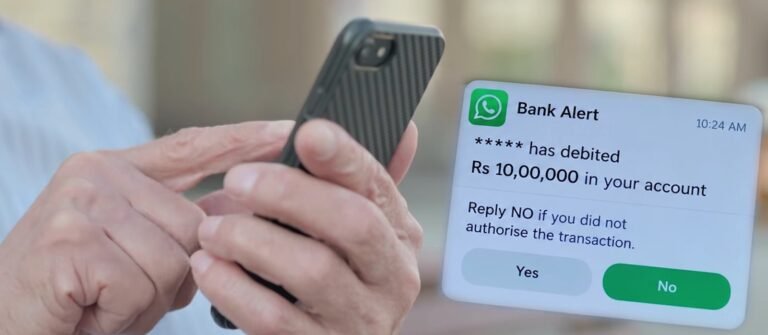
A calm, automated voice reads out six digits. That voice is your bank. You did not say a word. But the stranger on the line just heard your OTP, and he is typing it into a screen that is waiting for it.
Before you can react, the money is gone.
Table of Contents
The one rule that stops the call merging scam
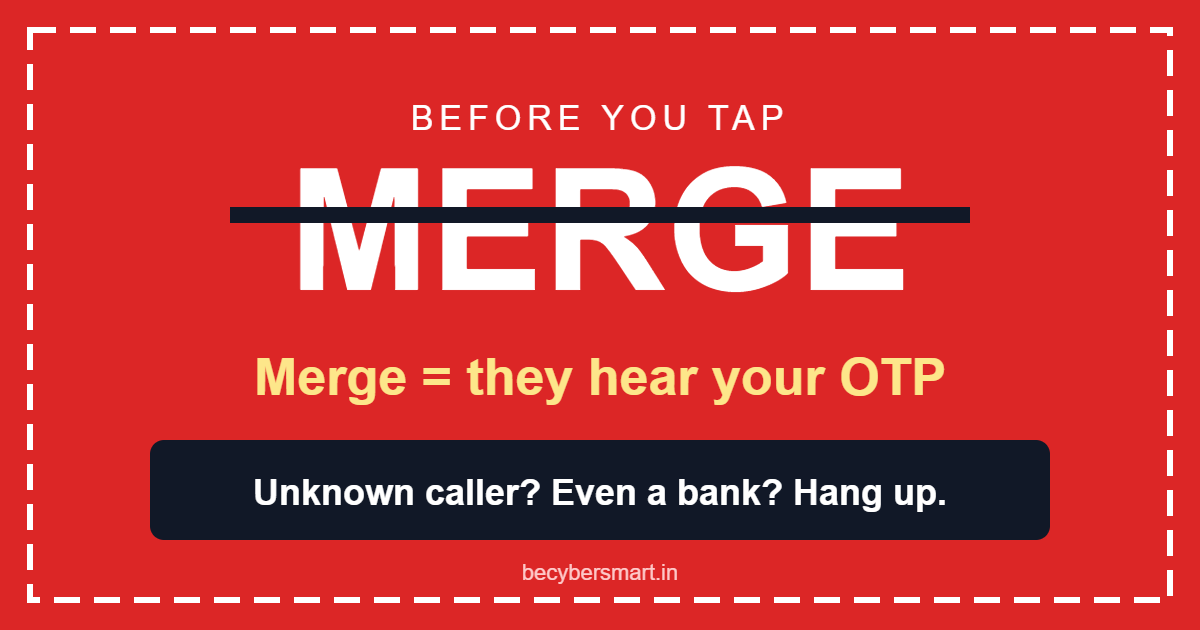
If they are not your friend, they are unknown. Never merge a call with an unknown caller. No exceptions.
A first-time caller is unknown. A “friend of a friend” is unknown. A “bank executive” is unknown. Even a call that really comes from your bank is unknown once it lands in the middle of another call.
Merge only with people you know. Never with a stranger.
That is the whole lesson. The rest of this post explains why the call merging scam works so well on smart people, and what to do if it already happened.
How the call merging scam works
- The stranger calls first. They say they got your number from a mutual friend, or offer you a job, an event invite or a service.
- They start the trap on their side. They already have some of your details and try to log in or start a transaction. Your bank now sends an OTP. Many banks can also deliver that OTP as a voice call.
- The second call arrives. It is a real automated OTP call from your bank, and it lands while you are still talking to the scammer.
- They ask you to merge. The reason changes: “my friend is calling”, “my manager will verify you”, “add this so we can finish the process”.
- You merge, they listen. The scammer hears the OTP and uses it at once. Scammers time the bank’s OTP call so that you do not get a chance to doubt it.
The call merging scam needs no hacking. It works only because you were friendly and pressed one button. NPCI, which runs UPI, has warned users about it publicly.
Why careful people fall for the call merging scam
- The second call is genuine. You check if it is the bank, and it is. That makes it feel safe.
- You never say the OTP. You only added a call. Nothing feels like a handover.
- It is over in seconds. The OTP call is short, and the scammer picks the moment.
- Merging is a normal feature. You may have used it for family calls many times, so a request to merge sounds harmless.
How not to get into the call merging scam
- Never merge a call with anyone who is not your friend. A first-time caller, an “official” or a “bank representative” all count as unknown. Treat the request to merge as the red flag itself.
- If you get another call while on a call, do not accept it. Hang up the first call. Then deal with the second one on its own.
- Even for a friend, check first. If a friend really wants you on a call, hang up and call or message them directly.
- Banks never need your OTP on a phone call. If anyone asks for it, or asks you to stay on the line while an OTP arrives, hang up.
- If a caller says there is a problem with your account, disconnect. Call your bank back on the official customer-care number from your card or the bank’s website.
- An OTP you did not ask for means someone is at your account’s door. Do not share it, and tell your bank.
- Check how you receive OTPs. If your bank lets you turn off OTP by voice call and you only use SMS, ask them about it.
- Block and report the number after you hang up.
If you already merged a call
If you fell for the call merging scam, speed matters most. Do these in the first few minutes:
- Call 1930, the national cyber crime helpline.
- Call your bank and ask them to block your card, UPI and net banking.
- File a complaint at cybercrime.gov.in with the time of the call, the numbers involved and the transaction details.
- Save the evidence: call logs, SMS and bank alerts.
- Change your PINs and passwords, and check which devices are logged in.
Quick questions
Is call merging safe?
Merging is safe with people you know. It is unsafe with a stranger, because you cannot control what else joins the call.
I did not say the OTP out loud. Can I still lose money?
Yes. Once the calls are merged, the scammer hears everything the automated voice says.
What if the second call really is from my bank?
It still does not belong on a call with someone else. Hang up on the stranger first.
Does this only happen with banks?
No. An OTP for a wallet, email or social account can be read out the same way.
Send this to one person today
Send it to your parents or grandparents, and to the family WhatsApp group, with one line:

Want to practise spotting scams like this? The free 3-minute daily quiz at becybersmart.in uses real scenarios in English, Hindi, Marathi and Tamil.